
Shopping Guide · Five Areas Compared
Handicrafts Shopping in Bali
Bali is renowned for its artisanal handicrafts, and where you shop changes both what you find and what you pay. This is the area-by-area guide.
- 5
- Shopping areas compared here
- Ubud
- The artisanal heart of the island
- Celuk
- Where to go for silver
- Apr–Oct
- Best months for outdoor markets

Where To Go
Area By Craft
- Ubud
- Art, carving, textiles
- Celuk
- Silver jewellery
- Kuta
- Volume & bargains
- Seminyak
- Designer & boutique
- Sanur
- Calmer, less pressure
Photographs: Bali Premium Trip
In Short
Where To Shop, and Why It Differs
Ubud is Bali’s artisanal heart and the best single base for handicraft shopping. Celuk is where silver is actually made. Kuta and Seminyak trade volume and design respectively, and Sanur offers the calmest shopping on the island.
- Ubud: the widest range of genuine craft, plus the galleries
- Celuk: family silver workshops, including custom commissions
- Kuta & Seminyak: bargains and designer work respectively
- Sanur: quieter stalls, less sales pressure, similar stock
The Areas
Five Places To Shop
Each area suits a different purpose. Pick by what you are actually trying to buy.
Ubud: The Artisanal Heart of Bali
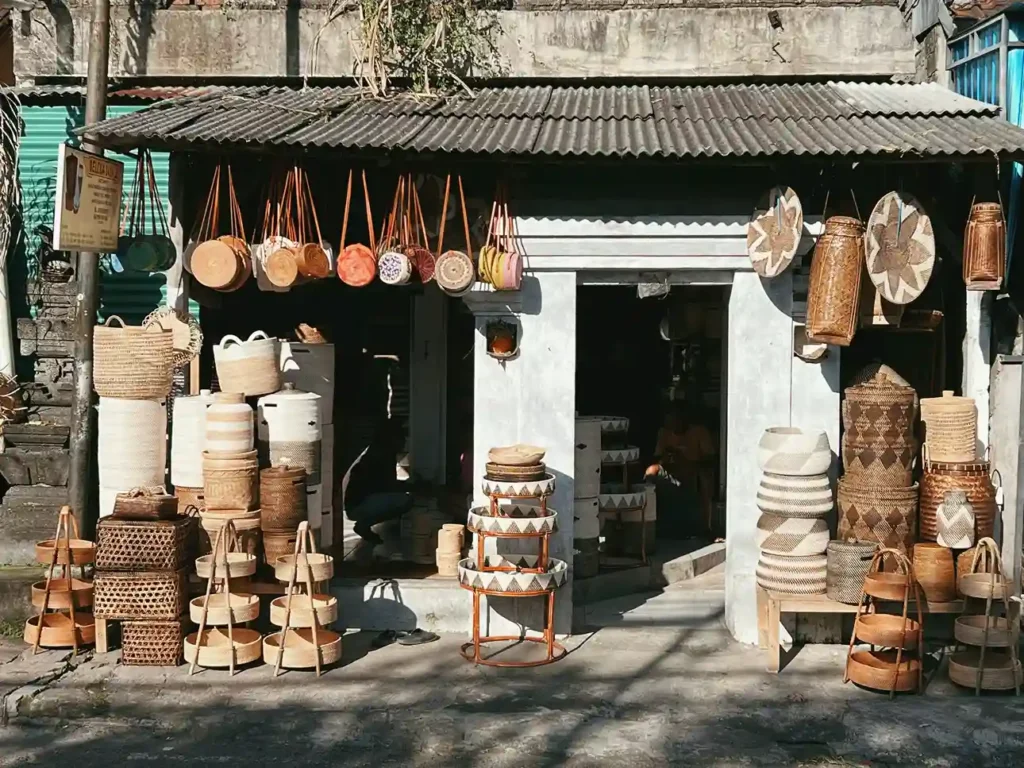
The densest concentration of genuine craft on the island — art market, galleries, carving shops and textile stalls within walking distance of one another. Best single base if you only have one day.
Exploring Celuk for Silver Jewellery
Bali’s silver village, in Gianyar. Family workshops cast, solder and finish on site, and most will take a custom commission. Prices are closer to fair from the outset than in resort areas.
Markets in Kuta and Seminyak
Kuta trades on volume and negotiation — good for buying in quantity if you know the price bands. Seminyak leans designer and boutique, with prices to match and better curation.
Authentic Batik Textiles
Sold across all five areas, but quality varies enormously. Learn the difference between hand-drawn, hand-stamped and printed before you spend anything meaningful.
The Allure of Bali’s Wood Carvings
Mas, just south of Ubud, is the carving village. Buying there gets you better work and a maker who can tell you which wood it is and how long it took.
Souvenir Shopping in Sanur
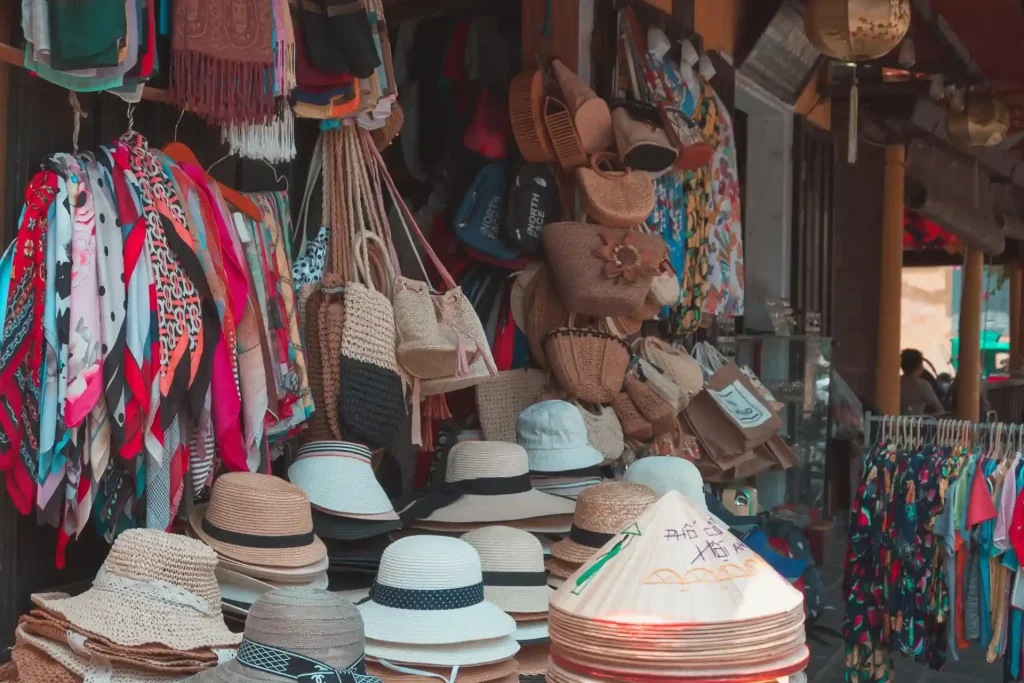
Calmer and less pressured than Kuta, with much of the same stock. A good choice if you dislike bargaining or are shopping with children in tow.
Traffic between Ubud, Celuk and the southern beach areas is heavy in the middle of the day. Shop early, or plan one area per day.
Handicraft, In Frame
What Handwork Looks Like
Weave, stitch and carve — the three tells that separate handwork from a factory copy.
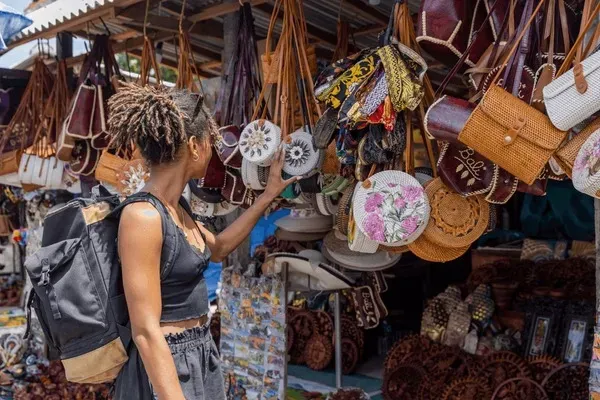
Woven bags and pouches
Rattan ata baskets and embroidered pouches — handwork that reads as craft rather than as a trinket.
Photograph: Shutterstock

Ubud Art Market
Barong masks and carved figures stacked to the roofline on Monkey Forest Street. Prices here open high — knowing the band is what keeps the bargaining fair.
Photograph: Flickr
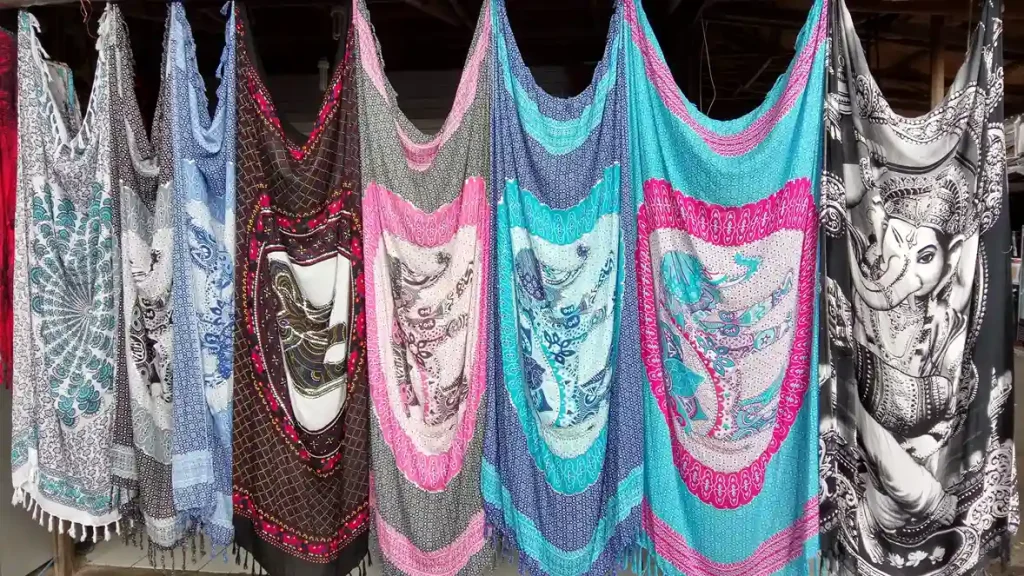
Printed kain pantai
The bright printed sarongs on every tourist rack — quick to pack, and the honest entry point to Balinese cloth.
Photograph: Wikimedia Commons
Plan The Day
How To Structure a Shopping Day
Allocate at least half a day, ideally a full one. This is the order that wastes the least time.
-
Start Early
Before 10AMMarkets are quietest and vendors most willing to negotiate early in the day. It is also the coolest part of it.
-
Do the Village First
Mid-morningVisit Celuk or Mas before the resort markets. Seeing genuine workshop quality first calibrates your eye for everything afterwards.
-
Compare Before Committing
Across three stallsCheck the same item at several vendors before buying. Price and quality both vary more than you expect within a single market.
-
Negotiate, Then Walk If Needed
At the point of saleOpen below your target, stay polite, and be genuinely willing to leave. Walking away is a normal part of the exchange.
-
Check Export Rules Before You Pay
Before money changes handsConfirm nothing is made from protected materials, and that anything old is not cultural property. This is the step people skip and regret.
Carry cash in small denominations. Cash is still the norm in local markets, and small notes make bargaining considerably easier.
Questions
Shopping Questions
Where is the best place in Bali to shop for handicrafts?
Should I buy in the craft village or the resort market?
What are the export regulations I should know about?
How do I avoid the worst of the traffic between shopping areas?
More On Bali Souvenirs
Related Guides
One Day, Limited Time?
We Will Plan the Route For You
Tell us what you want to buy and how long you have. We will tell you which areas to visit, in what order, and what to pay when you get there.