Textile Guide · Tulis, Cap & Print
Batik Fabric in Bali
Batik is the souvenir most often sold as something it is not. Learn the three grades and you will never overpay for printed cloth again.
- 3
- Grades you need to distinguish
- IDR 150k
- Where genuine batik starts
- Tulis
- Hand-drawn — the finest grade
- Hand wash
- Cold water, no direct sun
The Three Grades
What You Are Actually Buying
- Batik tulis
- Hand-drawn, finest
- Batik cap
- Hand-stamped
- Batik kombinasi
- Both techniques
- Printed
- Not batik at all
- Starting price
- IDR 150,000
Photographs: Bali Premium Trip
In Short
How To Tell Real Batik
Genuine batik is made by applying wax by hand — drawn with a canting pen (tulis) or stamped with a copper block (cap) — then dyeing the cloth, often repeatedly. Real batik shows slight irregularity across a repeat and has pattern visible on both faces. Printed imitation is perfectly uniform and usually pale on the reverse.
- Check the reverse: real batik dyes through, print sits on the surface
- Look for slight variation across the repeat — perfection means machine
- Genuine batik starts around IDR 150,000 and rises sharply
- Hand-drawn tulis can take weeks per cloth, and is priced accordingly
The Technique
The Art of Batik: Traditional Technique and Pattern
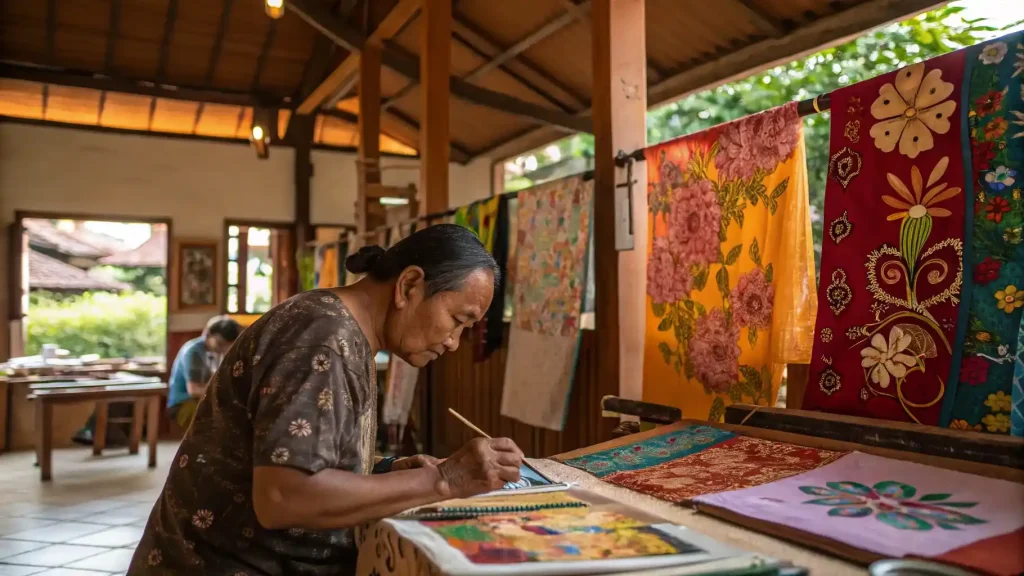
Batik is a wax-resist process. Molten wax is applied to cloth wherever the dye should not reach, the cloth is dyed, the wax is removed, and the sequence repeats for each additional colour. Every stage is a decision, which is why two cloths from the same workshop are never quite identical.
Batik tulis is drawn freehand with a canting, a small copper-spouted pen. A single fine cloth can take weeks, and the price reflects that labour honestly. Batik cap is stamped with a carved copper block, which is faster and more regular but still hand-applied and still genuinely batik. Batik kombinasi uses both: stamped ground, hand-drawn detail.
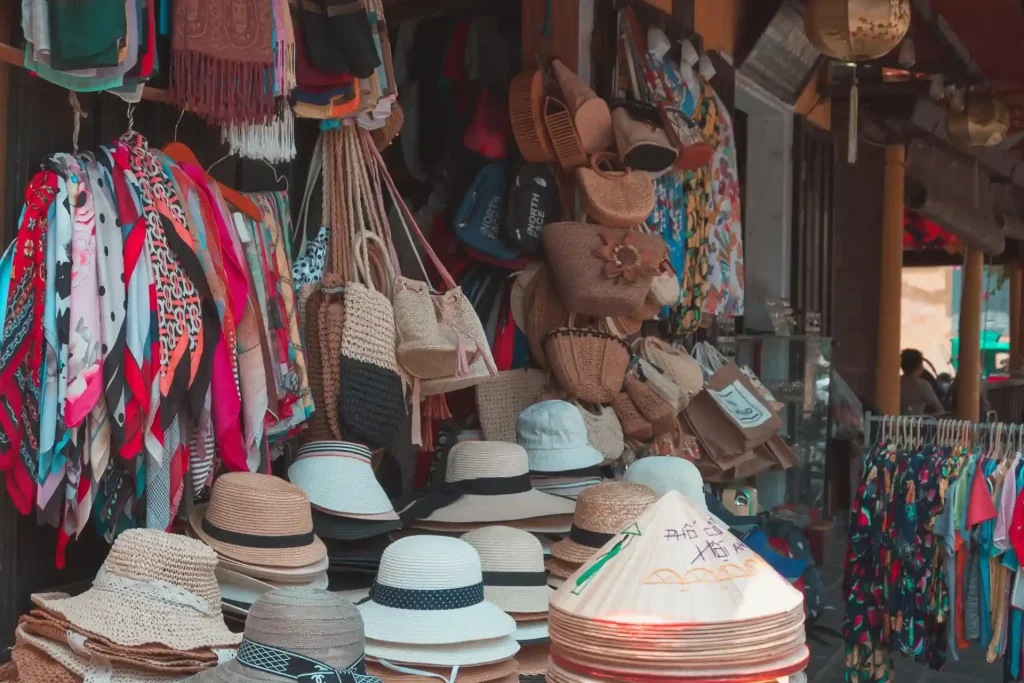
Printed cloth in batik patterns is not batik. It is often attractive and inexpensive, and there is nothing wrong with buying it knowingly — the problem is paying batik prices for it. The reverse of the fabric is the fastest test: wax-resist dyeing penetrates, so the pattern reads strongly on both faces.
Bali produces its own batik and also sells Javanese work, particularly from Pekalongan, Solo and Yogyakarta. Javanese batik is often the more refined; ask where a piece was made, since good sellers will tell you without being pressed.
- Batik tulis — hand-drawn with a canting; weeks of work; the highest grade
- Batik cap — hand-stamped with a copper block; faster, still genuine
- Batik kombinasi — stamped ground with hand-drawn detail
- Printed cloth — a batik pattern, not a batik process
Cloth, In Frame
From Printed Kain To Gringsing
The two ends of Balinese cloth: the printed sarong on every rack, and the double-ikat still woven in one walled village.
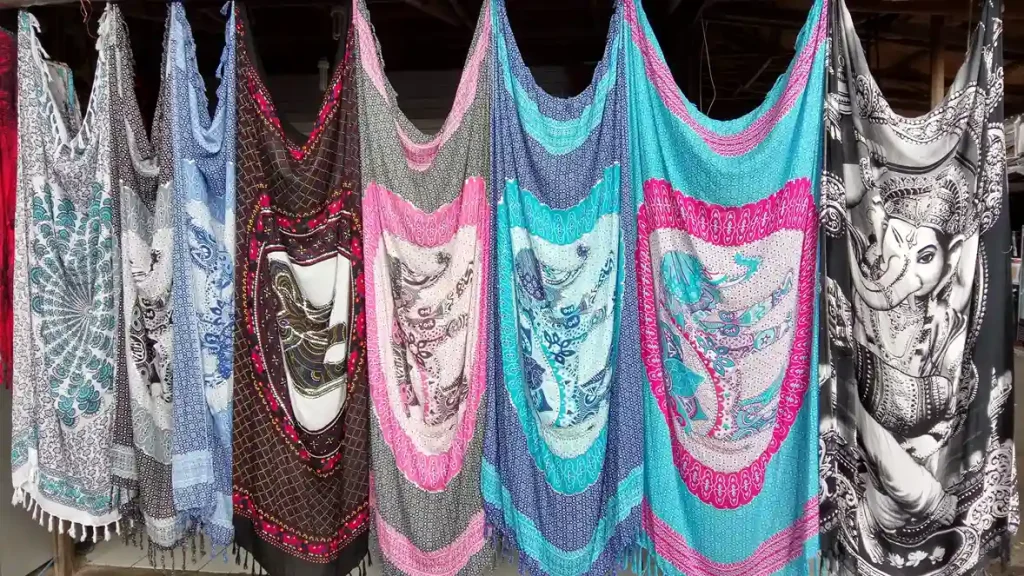
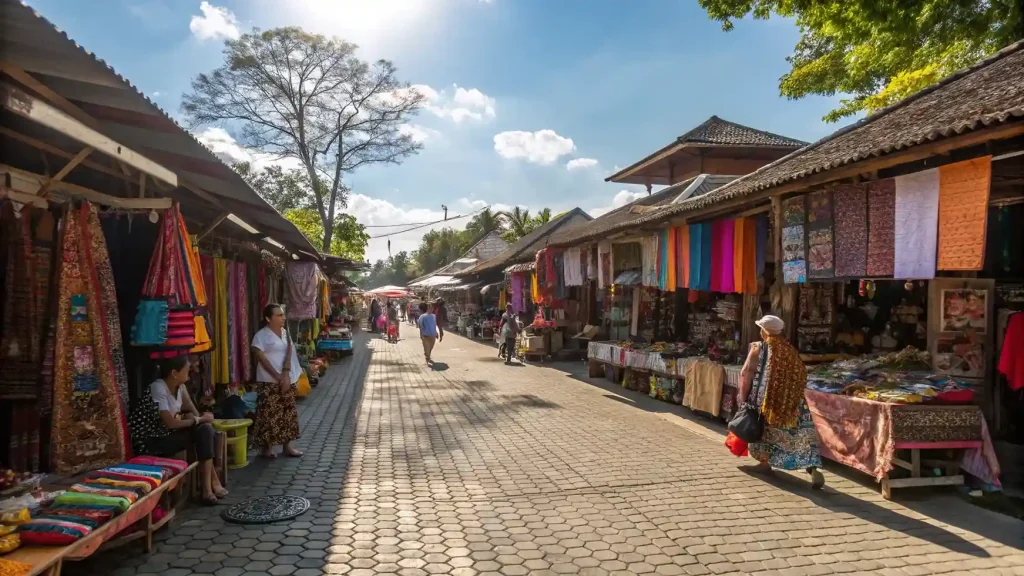
Printed kain pantai
The bright printed sarongs on every tourist rack — quick to pack, and the honest entry point to Balinese cloth.
Photograph: Wikimedia Commons
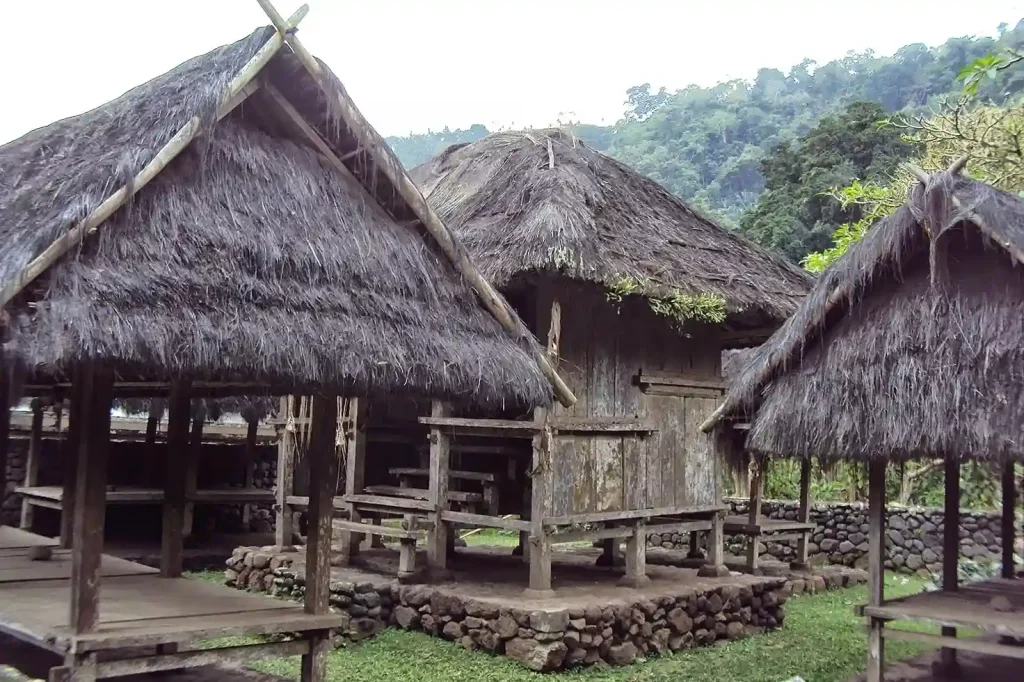
Tenganan Pegringsingan
The walled Bali Aga village that still weaves double-ikat gringsing — one of very few places on earth where the technique survives.
Photograph: Wikimedia Commons
Buying & Caring
Buying Batik, and Keeping It
Five steps from the stall to a cloth that still looks right in ten years.
-
Check the Reverse First
Before you ask the priceTurn the cloth over. Strong pattern on both faces suggests wax-resist dyeing; a pale, ghostly reverse suggests surface printing.
-
Look for Honest Irregularity
Across the repeatSlight variation in line weight and register is evidence of hand work. Flawless repetition is evidence of a machine.
-
Ask Where It Was Made
At the point of saleBali or Java, workshop or factory. A seller who knows the answer is usually a seller worth buying from.
-
Negotiate On Fair Ground
Tourist areasGenuine batik starts around IDR 150,000; designer boutique work in Seminyak and Ubud runs to hundreds of dollars. Know which conversation you are in.
-
Wash It Kindly
Once homeHand wash in cold water with a mild soap, never bleach, and dry in shade rather than direct sun. Natural dyes fade in strong light.
Batik is one of the easiest souvenirs to take home — it packs flat, weighs almost nothing, and raises no customs questions.
Side By Side
Hand-Made Batik vs Printed Imitation
Six checks you can make in under a minute, standing at the stall.
| What To Check | Printed Imitation | Genuine Batik |
|---|---|---|
| Reverse of the cloth | Pale, pattern barely visible | Pattern reads strongly on both faces |
| Pattern repeat | Perfectly uniform, machine-exact | Slight variation in line and register |
| Smell when new | Chemical or none | Faint trace of wax |
| Edges of the motif | Crisp and mechanical | Softer, with tiny wax bleed |
| Price | Well under IDR 150,000 | From IDR 150,000, rising steeply |
| Seller’s knowledge | Vague on origin | Names the maker or region |
None of this makes printed cloth a bad purchase — it just makes it a different purchase, at a different price.
Questions
Batik Questions
How can I tell if batik is genuine or printed?
What is the difference between batik tulis and batik cap?
How much should I pay for batik in Bali?
How do I wash and care for batik?
Are there any export restrictions on batik?
More On Bali Souvenirs
Related Guides
Standing In The Shop?
Send Us a Photo Before You Pay
Photograph the front, the reverse and the price tag, and send all three on WhatsApp. We will tell you what grade it is and whether the price is fair.