Artisan Guide · Village By Village
Bali Artisan Products
Bali is a paradise not only for its landscape but for its craft. This is a guide to who actually makes what — and how to buy it from the people whose hands are on it.
- 10
- Artisan categories covered here
- Celuk
- Silver — family workshops
- Mas
- Wood carving — near Ubud
- Direct
- Buy at the source where you can
Craft Map
Which Village Makes What
- Mas
- Wood carving
- Celuk
- Silver jewellery
- Ubud
- Art & galleries
- Gianyar
- Textiles & silver
- Seminyak
- Designer boutiques
Photographs: Bali Premium Trip
In Short
Why the Village Matters
Bali’s crafts are concentrated by village: wood carving in Mas, silver in Celuk, painting in and around Ubud. Buying where a craft is made usually means better work, a fairer price, and a maker who can explain exactly how the piece was produced.
- Family workshops in Celuk cast, solder and finish silver on site
- Carvers in Mas work to commission as well as for the shelf
- Market dynamics differ sharply between village and resort areas
- Ethical sourcing is a question you can simply ask — and should
The Categories
Ten Artisan Products Worth Knowing
Each of these is a distinct trade with its own centre, its own price logic and its own way of being faked.
Batik Textiles: A Fabric of Tradition
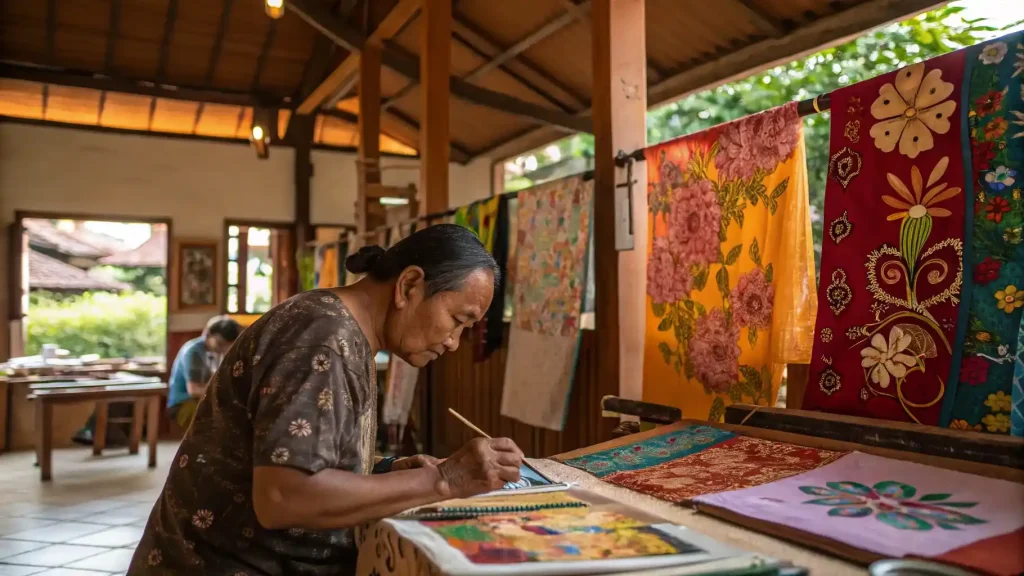
Wax-resist dyeing, hand-drawn or hand-stamped. The pattern irregularity is the proof of hand work — perfect repetition means print.
Wood Carvings: Sculpted Stories
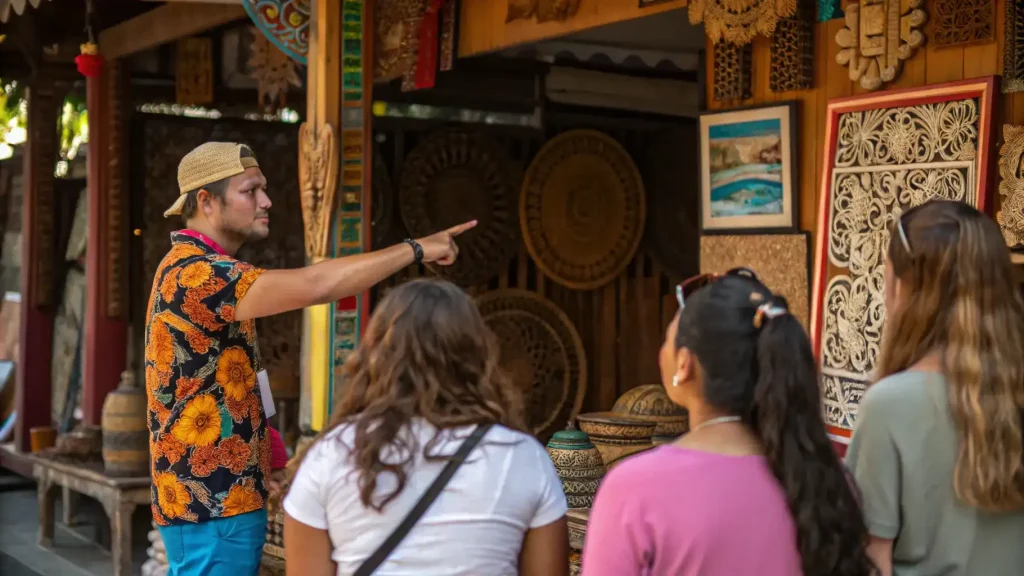
Carved in Mas near Ubud. Figures, panels and larger sculpture, usually in suar, teak or hibiscus wood.
Silver Jewellery: The Shimmer of Celuk
Family-run workshops producing rings, necklaces and bespoke commissions. Ask about purity and whether the piece was made on site.
Local Snacks and Spices: A Taste of Bali
Packaged coffee, tea and spice blends. The easiest category to take home and the safest at customs.
Traditional Textiles and Garments
Sarongs and temple-appropriate garments — practical souvenirs you will use again rather than shelve.
Religious Items: Sacred Souvenirs
Prayer beads, small shrines and deity figures. Modern reproductions only; genuine temple pieces are cultural property.
Balinese Paintings
From traditional narrative painting to contemporary canvases. Ubud is the centre; Seminyak leans designer.
Natural Beauty Products: Essence of Bali
Essential oils, balms and soaps, frangipani and sandalwood among the most common. Mind the 100 ml cabin limit.
Handwoven Baskets: Functional Art
Ata and rattan weaving — durable, light, and genuinely useful once home. Check for tight, even weave.
Ceramics & Pottery
Earthy glazed work from small studios, sold both in markets and through design shops. Pack with real care.
Artisan Work, In Frame
The Maker’s End Of The Trade
Where artisan products are finished, displayed and sold.
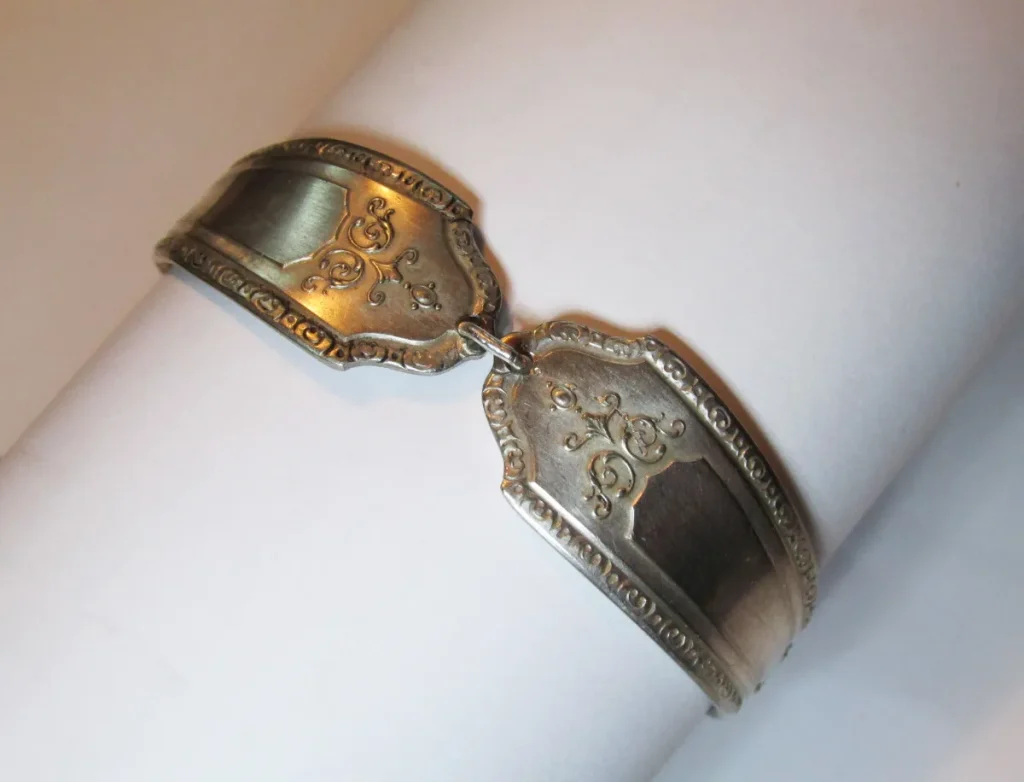
Silver from Celuk
A cuff worked in the Celuk manner. The engraving is cut by hand, which is exactly why no two pieces repeat.
Photograph: PxHere
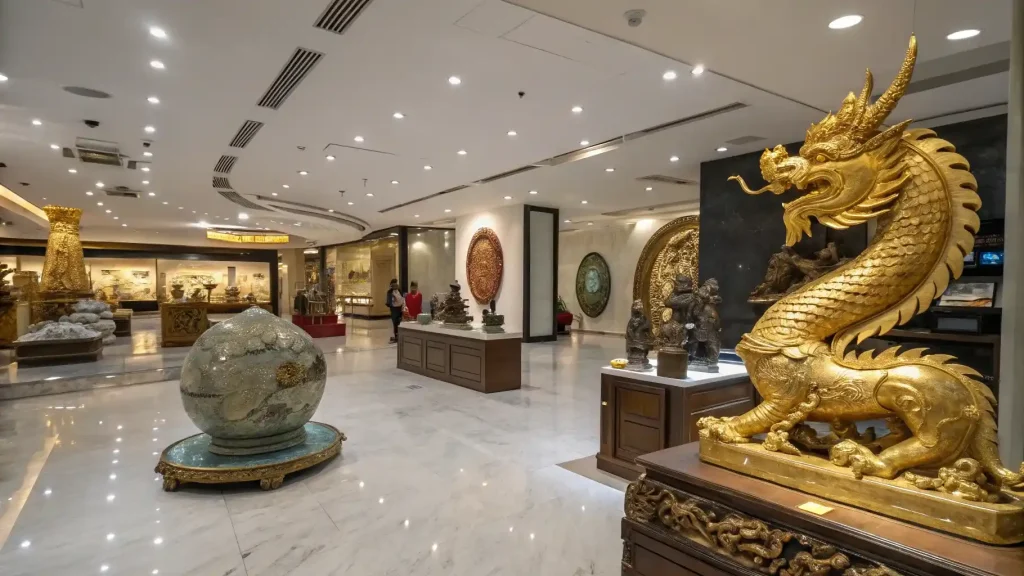
The gallery showroom
Carved and gilded work on lit plinths, labelled and documented. This is the end of the trade where provenance comes with the price.
Photograph: Bali Premium Trip
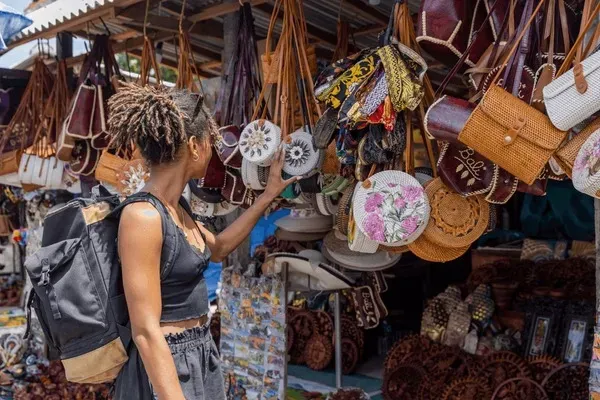
Woven bags and pouches
Rattan ata baskets and embroidered pouches — handwork that reads as craft rather than as a trinket.
Photograph: Shutterstock
Market Dynamics
Shopping Tips & Ethical Sourcing
Prices in Bali are not fixed in the way most visitors expect. In village workshops the number quoted is usually close to fair, because the maker is standing in front of you and the work speaks for itself. In resort-area markets the opening price assumes negotiation, often generously. Knowing which situation you are in changes how you should respond.
Ethical sourcing is easier to check than people assume: ask where the material came from, and ask who made the piece. Artisans who work responsibly answer both questions readily and often with some pride. Vendors reselling anonymous stock usually cannot, and that vagueness is itself the answer.
Sustainable practice is becoming more common across the island — reclaimed wood, reef-safe formulations, fair-wage silver co-operatives. Asking the question supports the makers who have made the investment, and it is the simplest form of leverage a visitor has.
- Ask what it is made of, and who made it — twice, if the first answer is vague
- Expect to negotiate in resort markets; expect not to in village workshops
- Avoid anything made from protected wildlife or unnamed “natural materials”
- Prefer workshops that will show you the process, not just the shelf
We take no commission from any workshop mentioned on this site, which is the only reason a recommendation here is worth reading.
Price Index
Artisan Price Bands
Indicative starting points by category, gathered from village workshops rather than resort storefronts.
Batik, hand-stamped
Hand-drawn work costs considerably more and is worth the difference.
IDR 150,000 and up
Silver, simple designs
Custom commissions quoted on the weight of silver plus labour.
IDR 100,000 and up
Wood carving, small
Figures and small panels; larger sculpture rises steeply.
IDR 50,000 and up
Handwoven baskets
Ata and rattan. Tight, even weave is what you are paying for.
IDR 75,000 and up
Ceramics & pottery
Studio work costs more than market stock, and looks it.
IDR 75,000 and up
Essential oils & balms
Sealed and labelled only. Checked baggage if over 100 ml.
IDR 70,000 per small bottle
Indicative market prices only, gathered from Bali markets and workshops. Prices move with the season, the exchange rate and your own bargaining — we reconfirm before every trip.
Questions
Artisan Product Questions
Where in Bali should I buy each craft?
Is it cheaper to buy directly from an artisan workshop?
How do I know an artisan product is ethically sourced?
Can a workshop make something to my own design?
More On Bali Souvenirs
Related Guides
Want An Introduction?
We Can Point You at the Right Workshop
Tell us the craft and the budget and we will name the village, the kind of workshop to look for, and a fair price to expect.