
Art Guide · Ubud & Seminyak
Bali Art Galleries
Bali’s galleries hold everything from traditional narrative painting to serious contemporary work. The hard part is not finding something you love — it is getting it home.
- Ubud
- The centre of the island’s art scene
- IDR 100k
- Where modest pieces start
- Millions
- Where established artists reach
- Unstretched
- How to fly a canvas home
Buying Art
Before You Commit
- Ask for
- Artist name & provenance
- Ask about
- Rolling & transport
- Check
- Age — antiquity rules
- Expect
- Some negotiation
- Budget for
- Framing at home
Photographs: Bali Premium Trip
In Short
How To Buy Art in Bali
Ubud is the centre of Bali’s art scene, with Seminyak running more contemporary and designer. Prices range from around IDR 100,000 for modest market work to several million for established artists. Decide how a piece will travel before you decide you want it.
- Ask for the artist’s name — anonymity usually means workshop production
- Ask whether a canvas can be unstretched and rolled for transport
- Negotiation is normal, even in galleries, though less aggressive than markets
- Genuinely antique work may face export restriction as cultural property
The Scene
Where To Look, and What You Will Find
Two centres, several traditions, and a very wide price range.
Exploring Ubud’s Art Scene
The island’s artistic heart: established galleries, artist-run spaces and the art market, all within a short distance. The widest range of traditional Balinese painting anywhere.
Seminyak’s Designer Galleries
More contemporary, more curated and more expensive. Better lit, better hung, and usually clearer about provenance and artist biography.
Traditional Balinese Painting
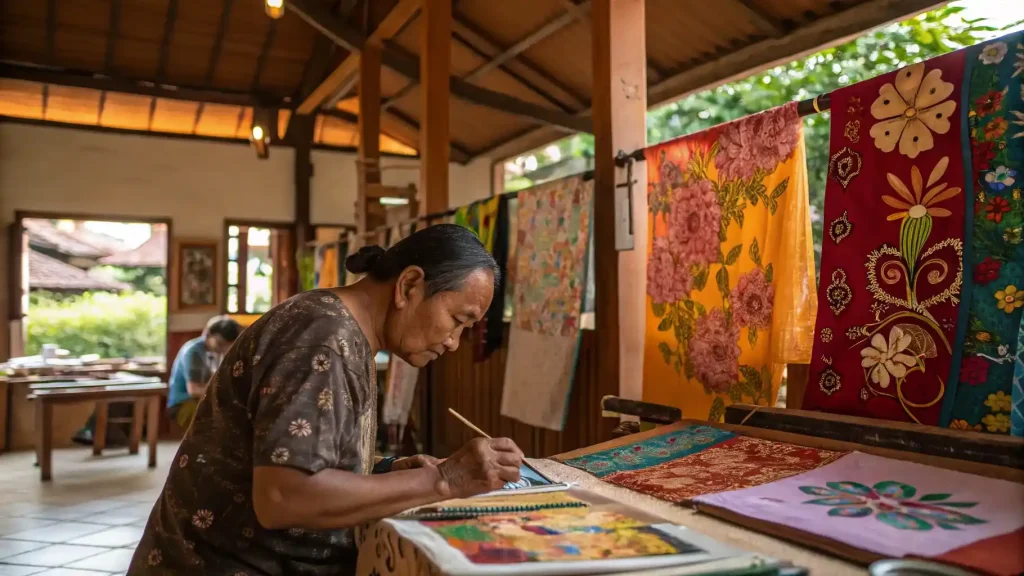
Narrative and ritual subjects worked in dense, layered detail — the Ubud, Batuan and Kamasan styles among them. Genuinely distinctive, and not easily found elsewhere.
Buying From the Studio
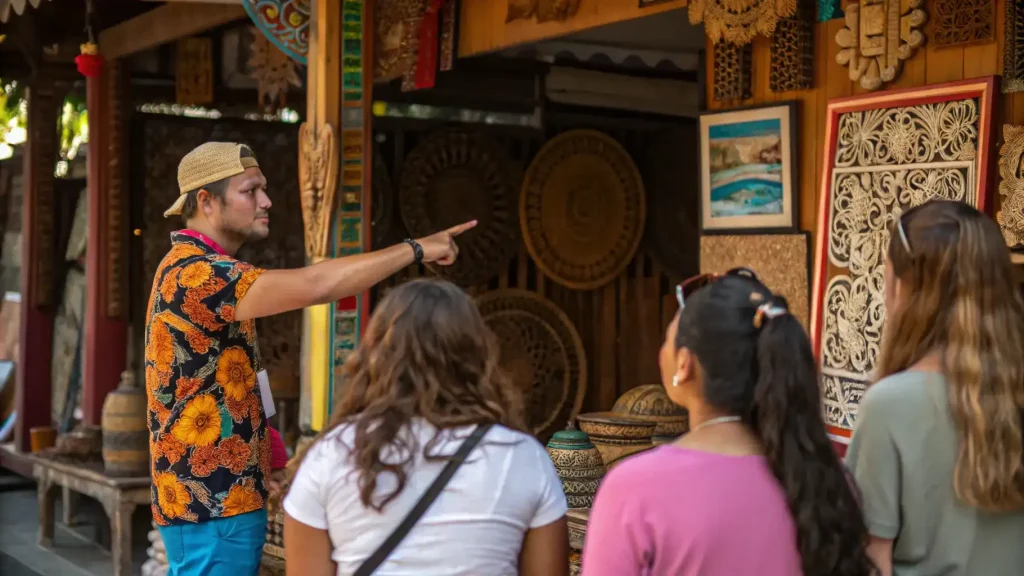
Many artists sell directly from their studio, often at better prices and always with more context. You also get to see the work in progress.
Sculpture and Carved Work
Wood and stone sculpture sits between craft and art, with the carving villages of Mas and Batubulan as the centres. Weight is the constraint here, not price.
Collecting Seriously
If you are buying above a few million rupiah, ask for documentation: artist name, year, medium and provenance. Reputable galleries provide it without being asked.
Inside The Galleries
What A Real Gallery Looks Like
Lit plinths, labels and documented provenance — the difference between a gallery and a souvenir shop.
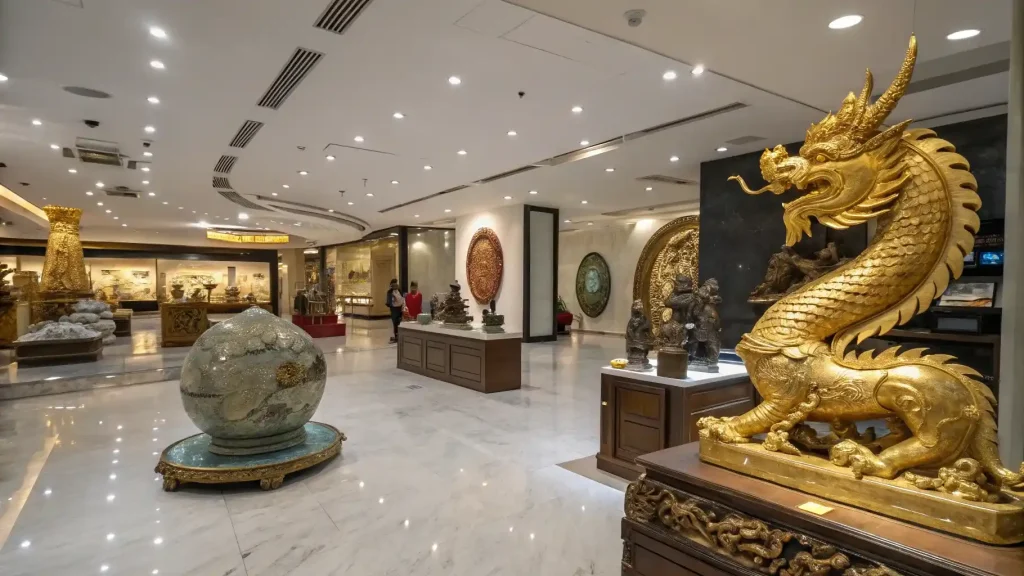
The gallery showroom
Carved and gilded work on lit plinths, labelled and documented. This is the end of the trade where provenance comes with the price.
Photograph: Bali Premium Trip
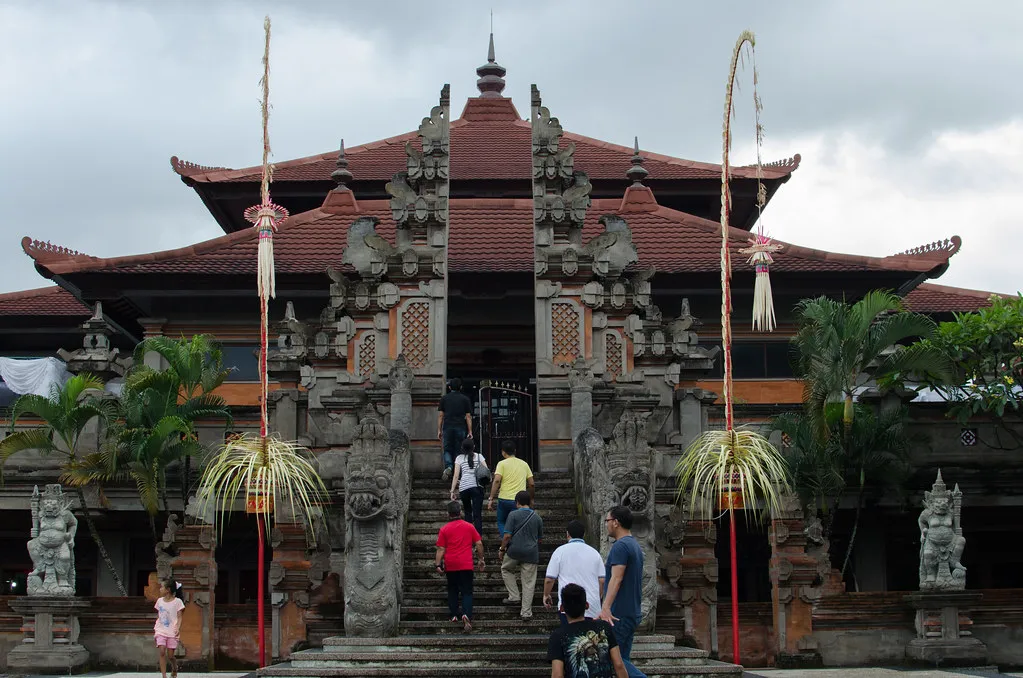
Bali Art Centre, Denpasar
The candi bentar gateway at Taman Werdhi Budaya, where the Bali Arts Festival runs through June and July.
Photograph: Flickr
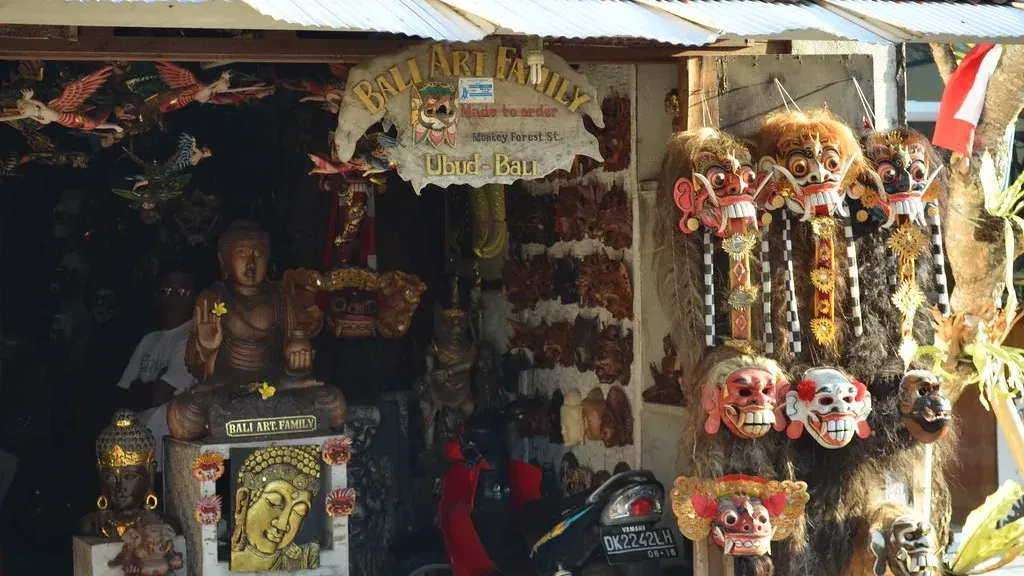
Ubud Art Market
Barong masks and carved figures stacked to the roofline on Monkey Forest Street. Prices here open high — knowing the band is what keeps the bargaining fair.
Photograph: Flickr
Price Ranges
What Art Costs in Bali
Price tracks the artist’s standing, the complexity of the work and the size of the piece — roughly in that order.
Market & Tourist Work
Small canvases and workshop pieces, often unsigned. Decorative rather than collectable, and priced honestly for what it is.
IDR 100,000 to 500,000
Emerging & Local Artists Best value
Signed original work from working artists, frequently sold directly from the studio. The best value band for a genuine piece.
IDR 500,000 to 5 million
Established Gallery Artists
Represented artists with exhibition history. Expect documentation, and expect the gallery to arrange shipping properly.
IDR 5 million to tens of millions
Sculpture, Wood & Stone
Priced by material, scale and carving time. Freight cost often rivals the purchase price for anything substantial.
IDR 500,000 upward
Bargaining is accepted in Bali galleries, though more gently than in markets. A polite enquiry about the best price is entirely normal.
Getting It Home
Legal Considerations and Transport
Most contemporary art leaves Indonesia without difficulty. The complications concern age and material: genuinely antique work and religious artifacts of real age can be restricted as cultural property, and anything incorporating protected animal material is a problem in both directions. If a seller describes a piece as genuinely old, ask what documentation exists.
Transport is the practical constraint. A canvas can almost always be unstretched and rolled into a tube, which turns an impossible item into ordinary checked baggage — ask the gallery to do it, and ask them to include the stretcher bars if they are worth keeping. Framing is better done at home anyway: glass does not fly well and framing is usually cheaper elsewhere.
For sculpture and anything genuinely large, use a gallery that ships regularly. They will crate it properly, handle the export paperwork and give you a tracked consignment. Get quotes before you buy, because freight on a heavy stone piece can easily exceed what you paid for it.
- Ask for the canvas to be unstretched and rolled in a tube
- Frame at home — cheaper, and glass does not travel
- Get a freight quote before committing to anything heavy
- Ask about documentation for anything described as antique
Questions
Art Buying Questions
Where are the best art galleries in Bali?
How much does art cost in Bali?
Can I negotiate the price in a Bali gallery?
How do I get a painting home from Bali?
Are there export restrictions on Balinese art?
More On Bali Art & Souvenirs
Related Guides
Considering A Piece?
We Will Sanity-Check It First
Send a photo, the asking price and whatever the gallery has told you about the artist. We will tell you whether it stacks up and how to get it home.