
Craft Guide · Seven Traditions
Local Crafts of Bali
Bali is a paradise for anyone in search of authentic local craft, with a deep tradition of weaving, carving and jewellery making. This is a guide to the trades themselves.
- 7
- Craft traditions covered
- Hand-made
- Every craft here, without exception
- IDR 50k
- Where honest prices start
- Village
- Each craft has its own centre
The Trades
Seven Living Crafts
- Batik
- Wax-resist dyeing
- Carving
- Mas, near Ubud
- Silver
- Celuk, Gianyar
- Weaving
- Endek & songket
- Masks
- Ritual & theatre
Photographs: Bali Premium Trip
In Short
What Balinese Craft Actually Is
Bali’s crafts are living trades rather than heritage displays: batik dyeing, wood carving, silver smithing, weaving, mask making and ceramics are all still worked commercially, mostly in family workshops, mostly in the village that has always specialised in them.
- Batik: wax-resist dyeing, hand-drawn or hand-stamped
- Carving: figures, panels and sculpture, centred on Mas
- Silver: cast and finished in the family workshops of Celuk
- Weaving, masks and ceramics: smaller trades, still very much alive
Craft By Craft
The Seven Traditions
What each craft is, how to recognise good work, and what it should cost.
Batik Textiles: A Canvas of Tradition
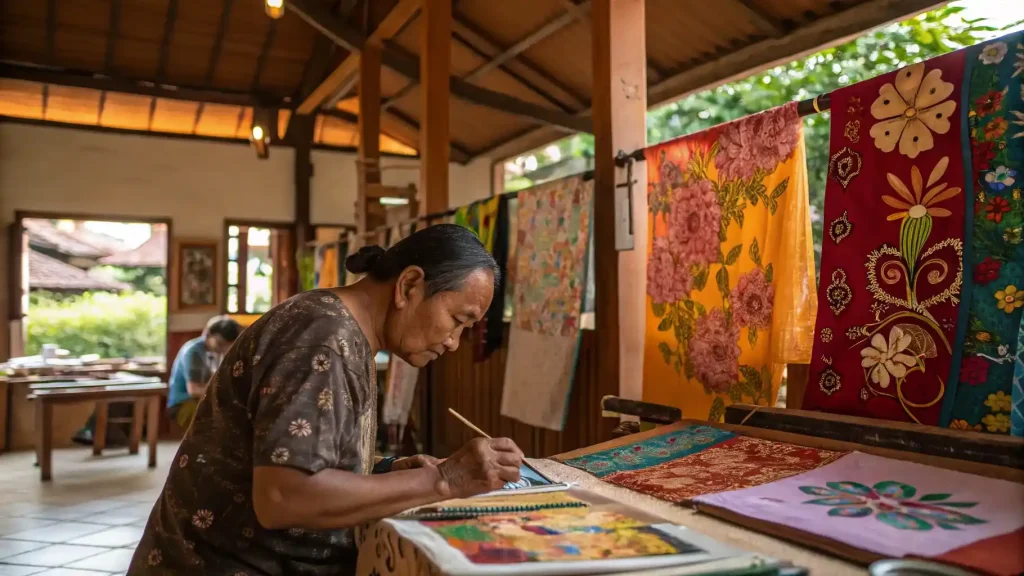
Wax is applied by hand — drawn with a canting or stamped with a copper block — then the cloth is dyed, and the process repeats. Slight irregularity is the proof of hand work.
Wood Carvings: From Forest to Art
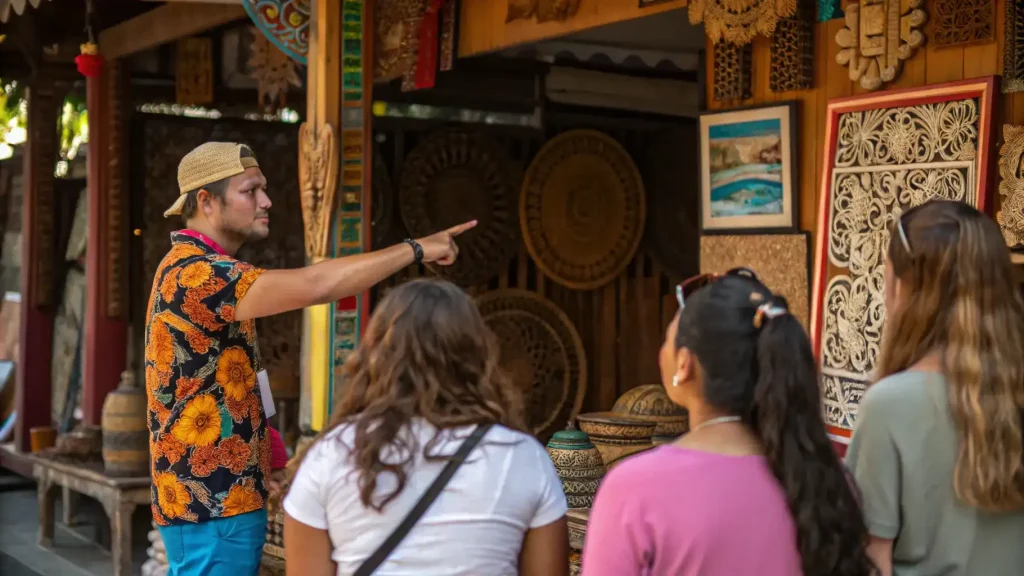
Carvers in Mas work suar, teak and hibiscus wood into deities, animals and abstract form. Look at the back and the base: finish quality shows where the eye is not meant to go.
Silver Jewellery: Celuk’s Shining Craft
Granulation and filigree are the signature Balinese techniques. Ask whether the piece was made on site, and ask about silver purity.
Traditional Weaving: Threads of Culture
Endek and songket are woven on backstrap and floor looms, songket with supplementary metallic thread. Slow work, priced accordingly, and quite unlike printed cloth.
Balinese Masks: Faces of Tradition
Carved for ritual and theatre, from Rangda to Barong. Decorative versions are widely sold; consecrated ritual masks are not really souvenirs and should be treated with respect.
Pottery and Ceramics: Earthy Elegance
Small studios across the island produce glazed tableware and vessels. Studio work costs more than market stock and looks it. Pack with real care.
Local Snacks and Spices: A Taste of Bali
Not a craft in the same sense, but the same logic applies: small producers, distinctive results, and the easiest category to bring home.
Local Craft, In Frame
Made Somewhere Specific
Every craft on this page belongs to a village that has worked it for generations.
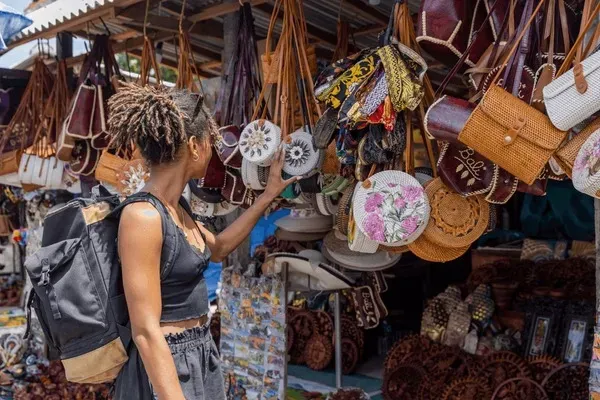
Woven bags and pouches
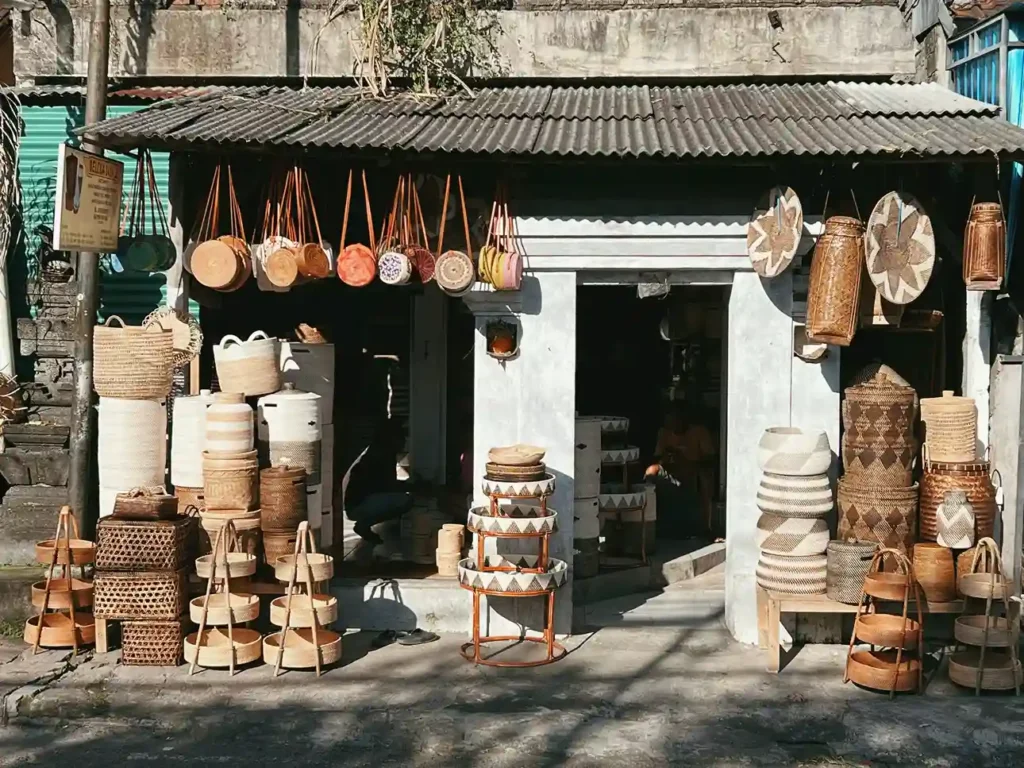
Rattan ata baskets and embroidered pouches — handwork that reads as craft rather than as a trinket.
Photograph: Shutterstock
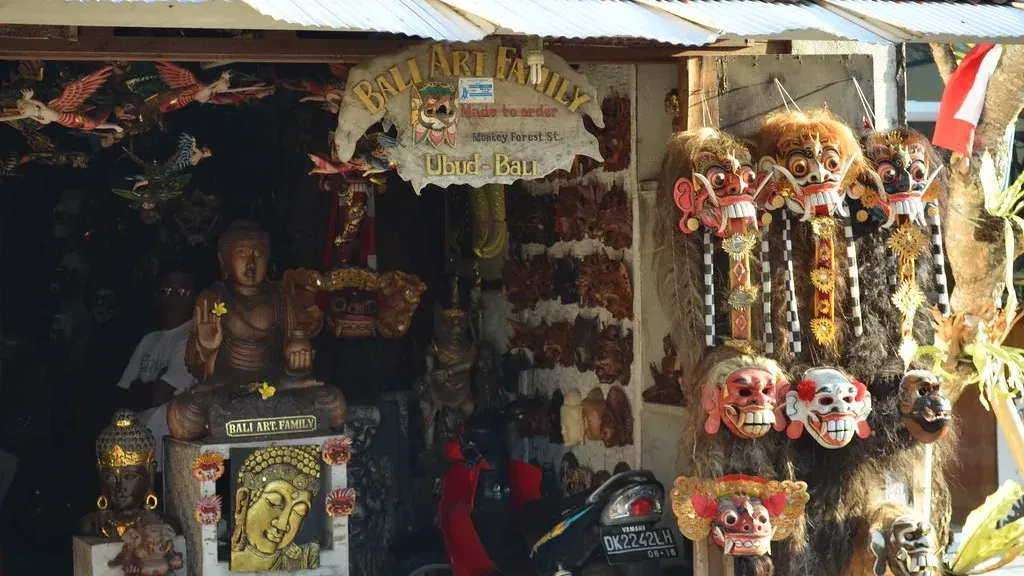
Ubud Art Market
Barong masks and carved figures stacked to the roofline on Monkey Forest Street. Prices here open high — knowing the band is what keeps the bargaining fair.
Photograph: Flickr
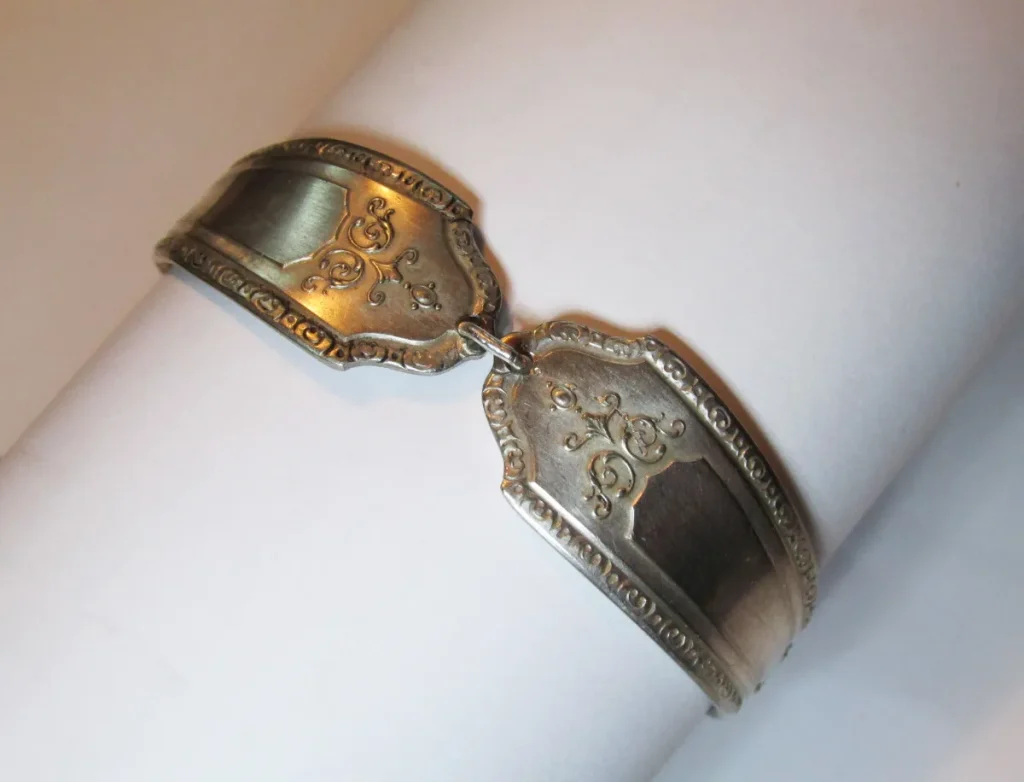
Silver from Celuk
A cuff worked in the Celuk manner. The engraving is cut by hand, which is exactly why no two pieces repeat.
Photograph: PxHere
Judging Quality
How To Tell Good Work From Filler
Across every craft on this page, the same three tells separate serious work from tourist filler. The first is consistency where it is hard: the back of a carving, the reverse of a woven panel, the inside of a silver ring. Makers who finish the hidden surfaces are makers who expect the piece to last.
The second is irregularity where it should exist. Hand-drawn batik varies slightly across a repeat; printed cloth does not. Hand-woven endek has small tension differences; machine cloth is uniform. Perfect repetition is usually a sign of a machine, not a master.
The third is the maker’s willingness to explain. Someone who cut, dyed or cast the thing in front of you will happily tell you which wood, which dye, which silver content and how long it took. Vagueness on all four is the clearest signal you are buying resold stock of unknown origin.
- Check the hidden surfaces — the back, the base, the inside
- Expect slight irregularity in anything genuinely hand-made
- Ask what it is made of; a specific answer is a good sign
- Avoid consecrated ritual objects — buy decorative versions instead
Prices here are indicative starting points from village workshops. Resort-area opening prices assume negotiation.
More On Bali Souvenirs
Related Guides
Want To See It Made?
We Can Arrange a Workshop Visit
Watching a craft being worked changes how you judge it — and how much you enjoy owning the result. Tell us which trade interests you.